

The Milan Cortina Winter Olympics are unfolding now.
Athletes compete without flags. Artificial snow sustains sports on a warming planet. Every training session is filmed before the sweat dries. Every emotion is monetized. Every gesture demands to be seen.
And somewhere underneath all of that — underneath the apparatus, the branding, the quantified body under constant surveillance — someone is still alone at four in the morning, running intervals in the dark.
Still a body that hurts.
Still the question: why do you do this to yourself?
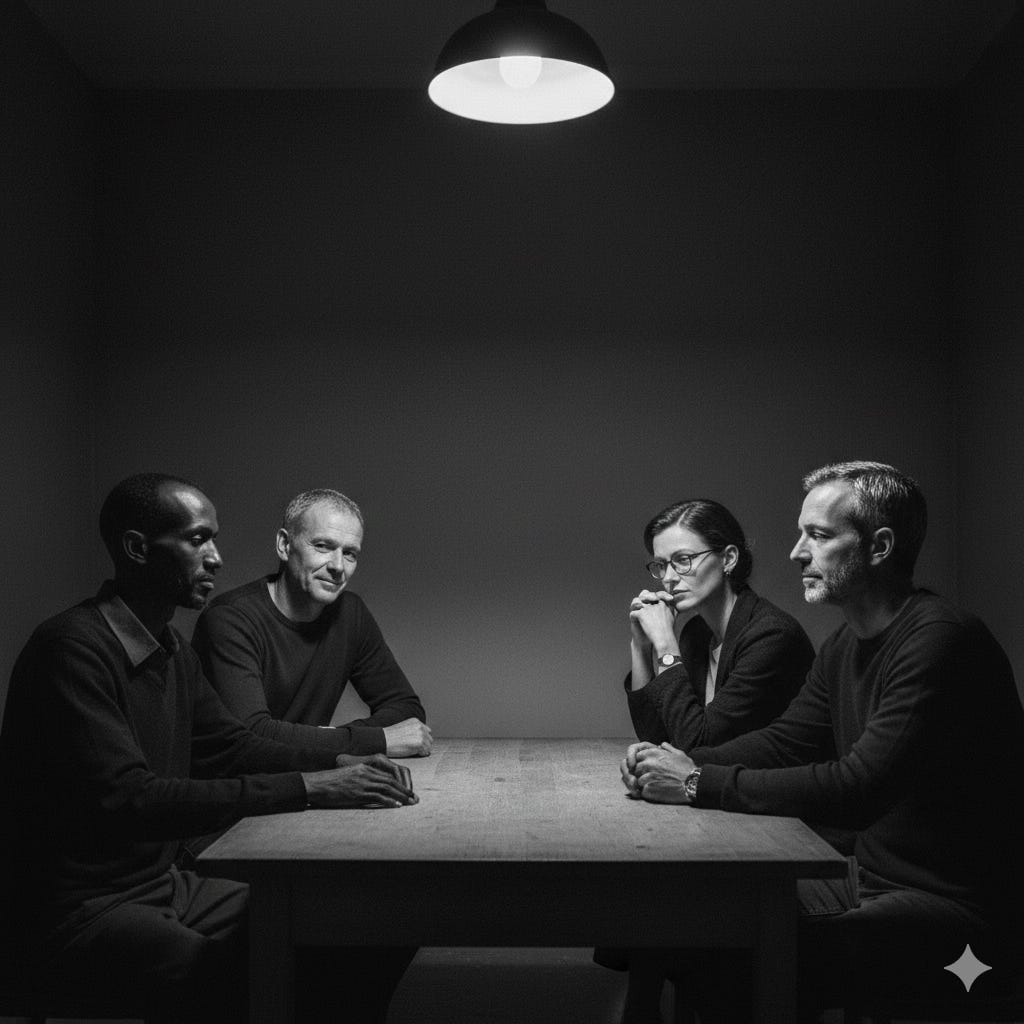
That question is older than any Games. It predates sponsorship deals, performance analytics, and athlete content strategy. It predates the Olympic movement itself.
It is the question of what it means to dedicate yourself entirely to something through the body — knowing, with absolute certainty, that the body will fail you.
For this episode, we brought back three people who lived that question from the inside. Who paid prices for it. Who have spent decades — in the continued lives we’ve imagined for them — watching how bodily discipline gets commodified, spiritualized, politicized, romanticized, and destroyed.
They are Later Characters. Speculative continuations. Not the towering figures they became in history, but something less and more than that — thinkers who have read what came after, changed in response, and arrived here carrying new wounds alongside their original convictions.
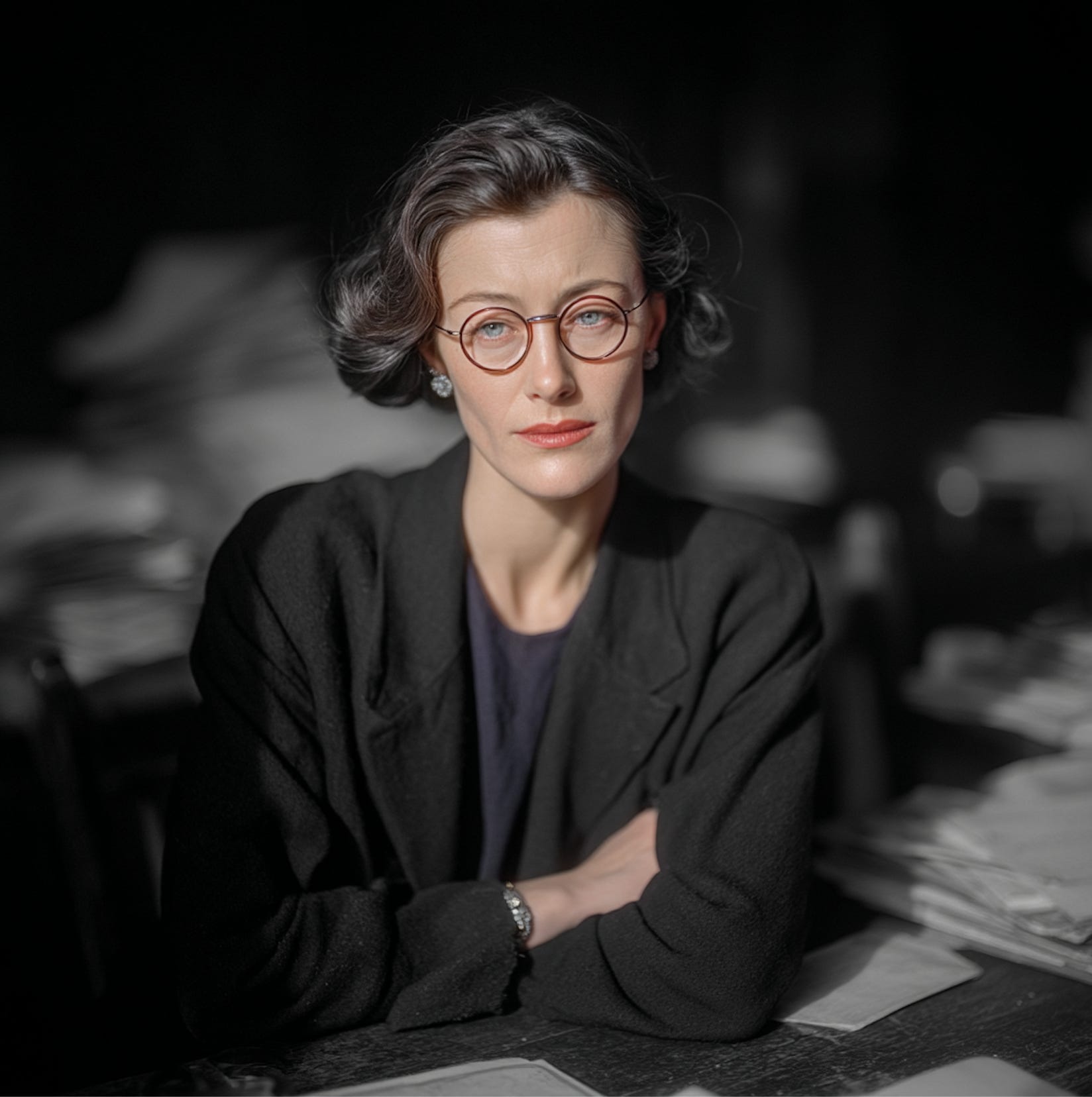
Simone Weil died in London in 1943 at thirty-four, her body weakened by tuberculosis and self-imposed starvation she understood as solidarity with occupied France. She wrote about attention, affliction, and decreation — the dissolution of self in service of something larger. Her language was later absorbed into wellness culture, productivity frameworks, mindfulness apps. Later Weil has spent eighty years sitting with a question she couldn’t ask then: was her asceticism spiritual practice, or something her era had no name for?
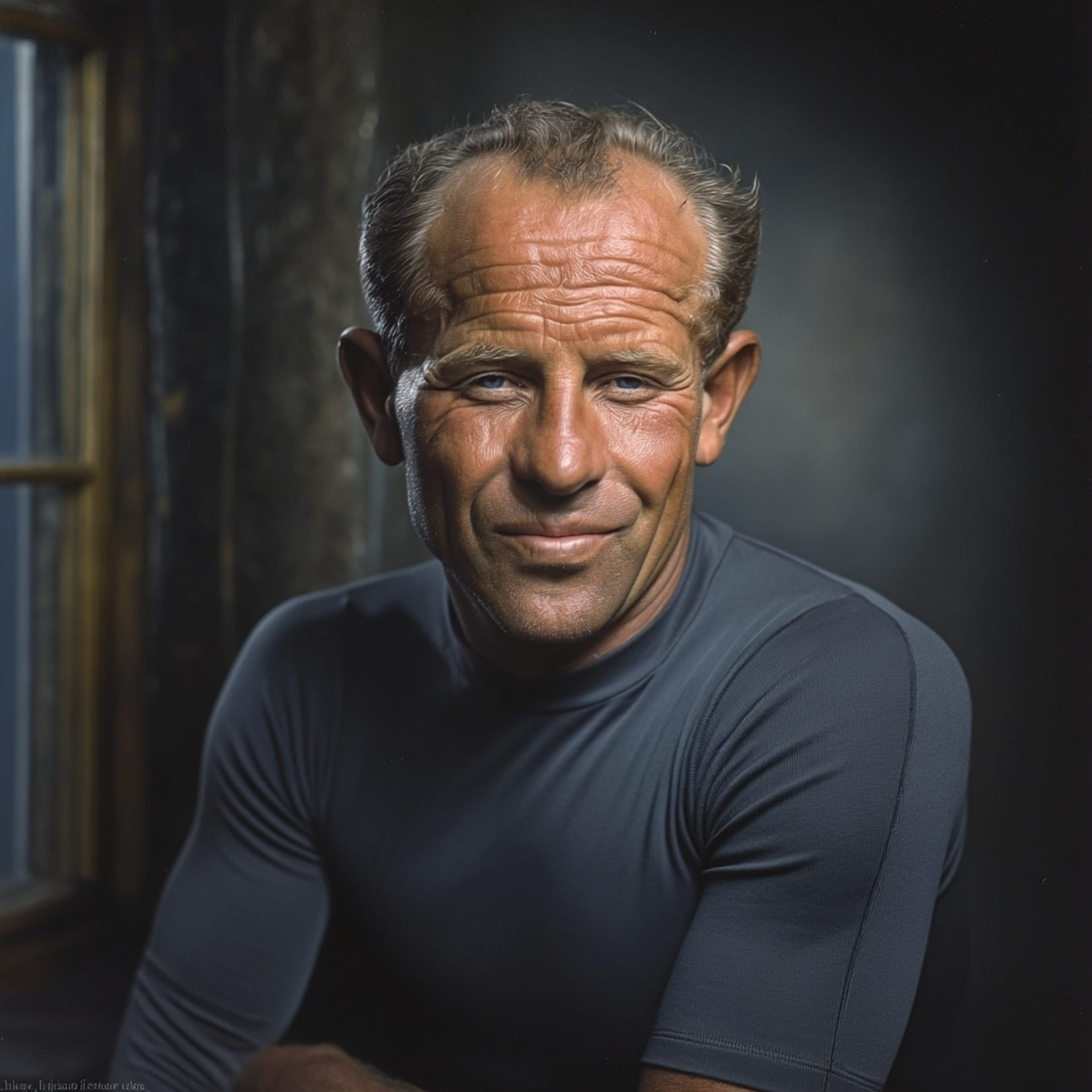
Emil Zátopek won three gold medals at the 1952 Helsinki Olympics. His face contorted in suffering while he smiled. He trained with brutal intensity — one hundred times four hundred meters, sometimes in army boots — and shared every secret with his rivals, because he believed competition should make everyone better. He supported the Prague Spring in 1968, was stripped of rank and sent to uranium mines, was later rehabilitated. Later Zátopek has watched sport become completely commercialized, watched amateurism die, watched athletes compete as brands rather than people. He still believes in something. He’s just less certain what.
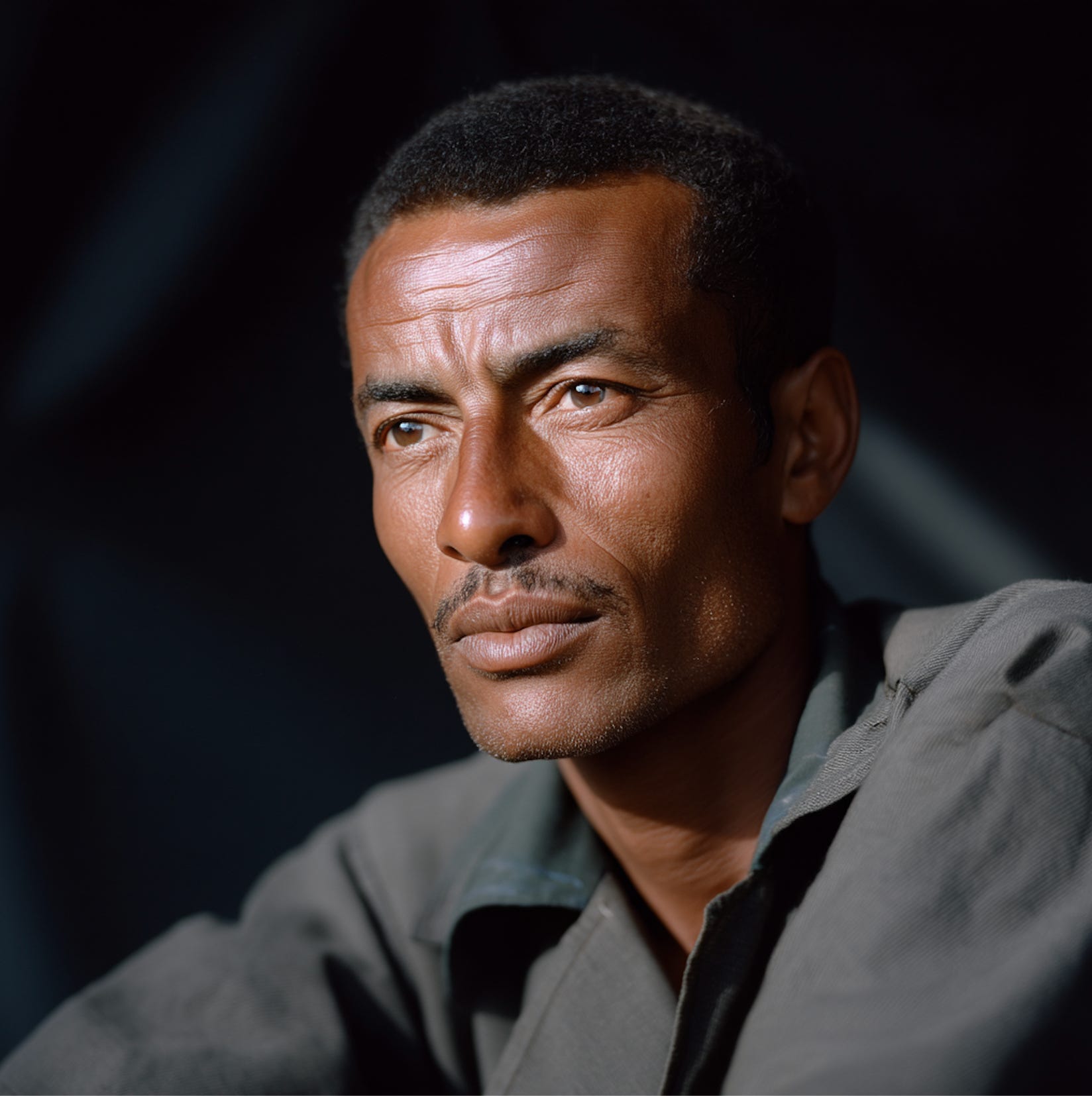
Abebe Bikila ran barefoot through Rome in 1960 — through the city whose empire had invaded Ethiopia — and crossed the finish line under the Arch of Constantine at night, becoming the first Black African to win Olympic gold. He won again in Tokyo in 1964, this time in shoes. At thirty-six, a car accident severed his spine. He competed afterward in wheelchair archery, still representing Ethiopia, until his death in 1973 at forty-one. Later Bikila has watched his barefoot run become romanticized symbol rather than strategic calculation. He knows what it means when your body is never fully yours — when nations watch to see if you’re worthy, when paralysis takes what defined you, when continuation is both choice and expectation.
In this episode they talk about what it feels like to train, to perform, to continue or stop. About the difference between suffering that opens you and suffering that destroys you — and how similar they feel from inside. About whether fair play is necessary for meaning, or whether striving is meaningful precisely because conditions are never equal. About what remains of a person who built everything on what their body could do, when the body is taken.
They don’t agree. David — our moderator, the living anchor in these conversations — holds the space without resolving it.
Nothing gets resolved.
But something gets illuminated. The cost. The question underneath the spectacle. The thing that persists when the apparatus falls away.
What the Body Knows is available now on Spotify and Apple Podcasts.
The Late Dialogues is an exercise in generative fiction. Our Later Characters are speculative continuations of historical figures — shaped by all that unfolded after their time on Earth, rekindled with respectful assistance from AI. They are not the persons they once were, nor the towering figures they became. They are less and more than that.
We make these conversations because some questions don’t age. They just change clothes.